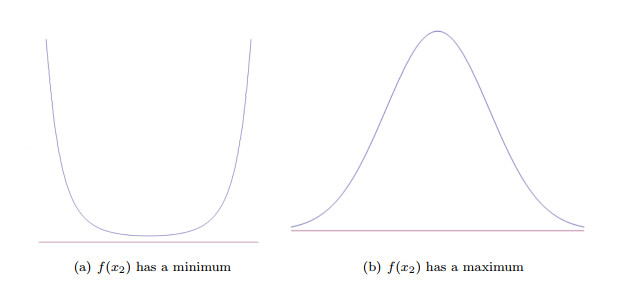
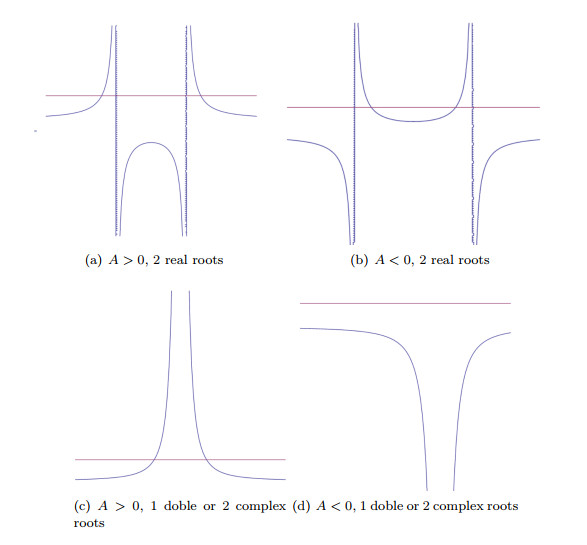
|
[1]
|
A. Andronov, A. Vitt and S. Khaikin, Theory of Oscillations, Pergamon Press, Oxford-New York-Toronto, Ont. 1966.


|
|
[2]
|
N. N. Bautin, On the number of limit cycles which appear with the variation of the coefficients from an equilibrium position of focus or center type, American Math. Soc., 1954 (1954), 19 pp.
|
|
[3]
|
M. di Bernardo, C. J. Budd, A. R. Champneys and P. Kowalczyk, Piecewise-Smooth Dynamical Systems: Theory and Applications, Appl. Math. Sci., vol. 163, Springer-Verlag, London, 2008.
|
|
[4]
|
D. C. Braga and L. F. Mello, Limit cycles in a family of discontinuous piecewise linear differential systems with two zones in the plane, Nonlinear Dynam., 73 (2013), 1283-1288.
doi: 10.1007/s11071-013-0862-3.
|
|
[5]
|
C. Buzzi, C. Pessoa and J. Torregrosa, Piecewise linear perturbations of a linear center, Discrete Contin. Dyn. Syst., 33 (2013), 3915-3936.
doi: 10.3934/dcds.2013.33.3915.
|
|
[6]
|
V. Carmona, F. Fernández-Sánchez and D. D. Novaes, A new simple proof for's the Lum–Chua conjecture revisited, Nonlinear Anal. Hybrid Syst., 40 (2021), Paper No. 100992, 7 pp.
doi: 10.1016/j.nahs.2020.100992.
|
|
[7]
|
F. Dumortier, J. Llibre and J. C. Artés, Qualitative Theory of Planar Differential Systems, UniversiText, Springer-Verlag, New York, 2006.
|
|
[8]
|
E. Freire, E. Ponce, F. Rodrigo and F. Torres, Bifurcation sets of continuous piecewise linear systems with two zones, Internat. J. Bifur. Chaos Appl. Sci. Engrg., 8 (1998), 2073-2097.
doi: 10.1142/S0218127498001728.
|
|
[9]
|
E. Freire, E. Ponce and F. Torres, A general mechanism to generate three limit cycles in planar Filippov systems with two zones, Nonlinear Dynamics, 78 (2014), 251-263.
doi: 10.1007/s11071-014-1437-7.
|
|
[10]
|
F. Giannakopoulos and K. Pliete, Planar systems of piecewise linear differential equations with a line of discontinuity, Nonlinearity, 14 (2001), 1611-1632.
doi: 10.1088/0951-7715/14/6/311.
|
|
[11]
|
M. Han and J. Yang, The maximum number of zeros of functions with parameters and application to differential equations, J. Nonlinear Modeling and Analysis, 3 (2021), 13-34.
|
|
[12]
|
M. Han and W. Zhang, On Hopf bifurcation in non–smooth planar systems, J. Differential Equations, 248 (2010), 2399-2416.
doi: 10.1016/j.jde.2009.10.002.
|
|
[13]
|
D. Hilbert, Mathematische probleme, Bull. Amer. Math. Soc. (N.S.), 37 (2000), 407-436.
doi: 10.1090/S0273-0979-00-00881-8.
|
|
[14]
|
S. M. Huan and X. S. Yang, On the number of limit cycles in general planar piecewise systems, Discrete Cont. Dyn. Syst., 32 (2012), 2147-2164.
doi: 10.3934/dcds.2012.32.2147.
|
|
[15]
|
Y. Ilyashenko, Centennial history of Hilbert's $16$th problem, Bull. Amer. Math. Soc. (N.S.), 39 (2002), 301-354.
doi: 10.1090/S0273-0979-02-00946-1.
|
|
[16]
|
W. Kapteyn, On the midpoints of integral curves of differential equations of the first degree, Nederl. Akad. Wetensch. Verslag. Afd. Natuurk. Konikl. Nederland, (Dutch), (1911), 1446–1457.
|
|
[17]
|
W. Kapteyn, New investigations on the midpoints of integrals of differential equations of the first degree, Nederl. Akad. Wetensch. Verslag Afd. Natuurk., 20 (1912), 1354-1365.
|
|
[18]
|
J. Li, Hilbert's $16$th problem and bifurcations of planar polynomial vector fields, Internat. J. Bifur. Chaos Appl. Sci. Engrg., 13 (2003), 47-106.
doi: 10.1142/S0218127403006352.
|
|
[19]
|
L. Li, Three crossing limit cycles in planar piecewise linear systems with saddle-focus type, Electron. J. Qual. Theory Differ. Equ., (2014), 14 pp.
doi: 10.14232/ejqtde.2014.1.70.
|
|
[20]
|
J. Llibre, D. D. Novaes and M. A. Teixeira, Limit cycles bifurcating from the periodic orbits of a discontinuous piecewise linear differential center with two zones, Internat. J. Bifur. Chaos Appl. Sci. Engrg., 25 (2015), 1550144, 11 pp.
doi: 10.1142/S0218127415501448.
|
|
[21]
|
J. Llibre, M. Ordóñez and E. Ponce, On the existence and uniqueness of limit cycles in planar piecewise linear systems without symmetry, Nonlinear Anal. Real World Appl., 14 (2013), 2002-2012.
doi: 10.1016/j.nonrwa.2013.02.004.
|
|
[22]
|
J. Llibre and E. Ponce, Three nested limit cycles in discontinuous piecewise linear differential systems with two zones, Dyn. Contin. Discrete Impuls. Syst. Ser., 19 (2012), 325-335.
|
|
[23]
|
J. Llibre and M. A. Teixeira, Piecewise linear differential systems without equilibria produce limit cycles?, Nonlinear Dyn., 88 (2017), 157-164.
doi: 10.1007/s11071-016-3236-9.
|
|
[24]
|
J. Llibre and M. A. Teixeira, Piecewise linear differential systems with only centers can create limit cycles?, Nonlinear Dyn., 91 (2018), 249-255.
doi: 10.1007/s11071-017-3866-6.
|
|
[25]
|
R. Lum and L. O. Chua, Global properties of continuous piec ewise-linear vector fields. Part I: Simplest case in $\mathbb{R}^2$, Internat. J. Circuit Theory Appl., 19 (1991), 251-307.
doi: 10.1002/cta.4490190305.
|
|
[26]
|
R. Lum and L. O. Chua, Global properties of continuous piecewise-linear vector fields. Part II: Simplest symmetric case in $\mathrm{R}^2$, Internat. J. Circuit Theory Appl., 20 (1992), 9-46.
doi: 10.1002/cta.4490200103.
|
|
[27]
|
O. Makarenkov and J. S. W. Lamb, Dynamics and bifurcations of nonsmooth systems: A survey, Phys. D, 241 (2012), 1826-1844.
doi: 10.1016/j.physd.2012.08.002.
|
|
[28]
|
D. Schlomiuk, Algebraic particular integrals, integrability and the problem of the center, Trans. Amer. Math. Soc., 338 (1993), 799-841.
doi: 10.1090/S0002-9947-1993-1106193-6.
|
|
[29]
|
D. J. W. Simpson, Bifurcations in Piecewise-Smooth Continuous Systems, World Sci. Ser. Nonlinear Sci. Ser. A, vol. 70, World Scientific Publishing Co. Pte. Ltd., Hackensack, NJ, 2010.
doi: 10.1142/7612.
|
|
[30]
|
N. I. Vulpe, Affine–invariant conditions for the topological discrimination of quadratic systems with a center, Differentsial' nye Uravneniya, 19 (1983), 371-379.
|


 {{journal.titleEn}}


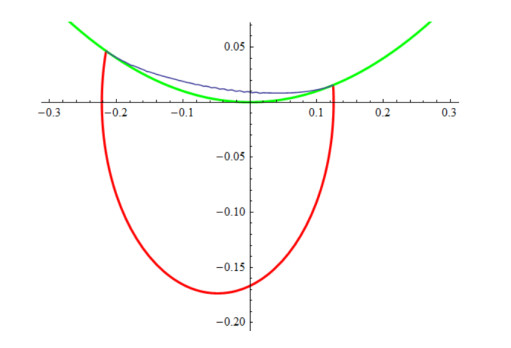
 Download: